
Benicia Sources for Previous Residents
Each source covers a different part of the backward trail. The Recorder is strongest for title parties and legal descriptions. A directory or newspaper can show an occupant or life event. A Sanborn sheet shows a structure in a surveyed area. Census schedules show a household at a federal enumeration point. The era table keeps those roles distinct.
| Source | Years it covers | Where held | What it shows |
|---|---|---|---|
| Recorded-document images | Computer 1955-present; microfilm 1848-1954 | Solano Recorder public research area or mail request | Title parties, legal description, recording chain |
| Benicia directory issues | 1871-72, 1874, 1878-79, 1884-85, November 1928 | Huntington, SCGS, FamilySearch/Sonoma Library, Museum | Resident, landowner, subscriber, address, or phone clues |
| Sanborn maps | 1886, 1891, 1899, 1913 | Historical Society links; 1899 Library of Congress | Structure footprint, use, and number context |
| Newspapers | 1899-1977 across three titles | Benicia Public Library | Moves, deaths, sales, notices, and community events |
| Federal census | Public through 1950 | NARA, library genealogy tools, FamilySearch | Household members, relationships, ages, and geography |
| Probate, cemetery, and court | Collection-specific | Solano Superior Court, city cemetery, SCGS | Heirs, death clues, case events, and family links |
The right source depends on the period. A current title chain should not be padded with an old directory, and an old household should not be inferred from a present owner.
Benicia Previous Residents in Deeds
Start with the present address and resolve it to an APN. If the public property result does not show the owner, use the Solano Assessor counter for ownership, value, and property-characteristic research at 675 Texas Street, Fairfield. Then search the Recorder by the current owner as grantee. The purchase deed should name the prior owner as grantor, which becomes the next name and date clue.
- Record the APN, situs address, subdivision, lot or block, and any current title lead.
- Search the Recorder in both grantor and grantee roles with a narrow date range and document class.
- Write down the document number, recording date, legal description, and paired party names.
- Obtain the image at the public research area or request a copy by mail; do not rely on the index line alone.
- Repeat with the earlier grantor, checking the legal description at each step.
- Grantor
- The party conveying an interest in a recorded instrument.
- Grantee
- The party receiving that interest in the instrument.
- Chain of title
- The linked sequence of recorded transfers used to follow an interest backward.
- Legal description
- The recorded land description that helps test whether two address clues refer to the same parcel.
Recorder computer images reach 1955, while office microfilm reaches 1848. The online index's first year is not stated publicly, so 1955 is an image-access boundary, not a proven online cutoff.
Solano court records and fees are a separate route when an owner trail ends in probate or another court case.
The Solano court records capture shows the copy and request channel that can close a probate or case-file gap.
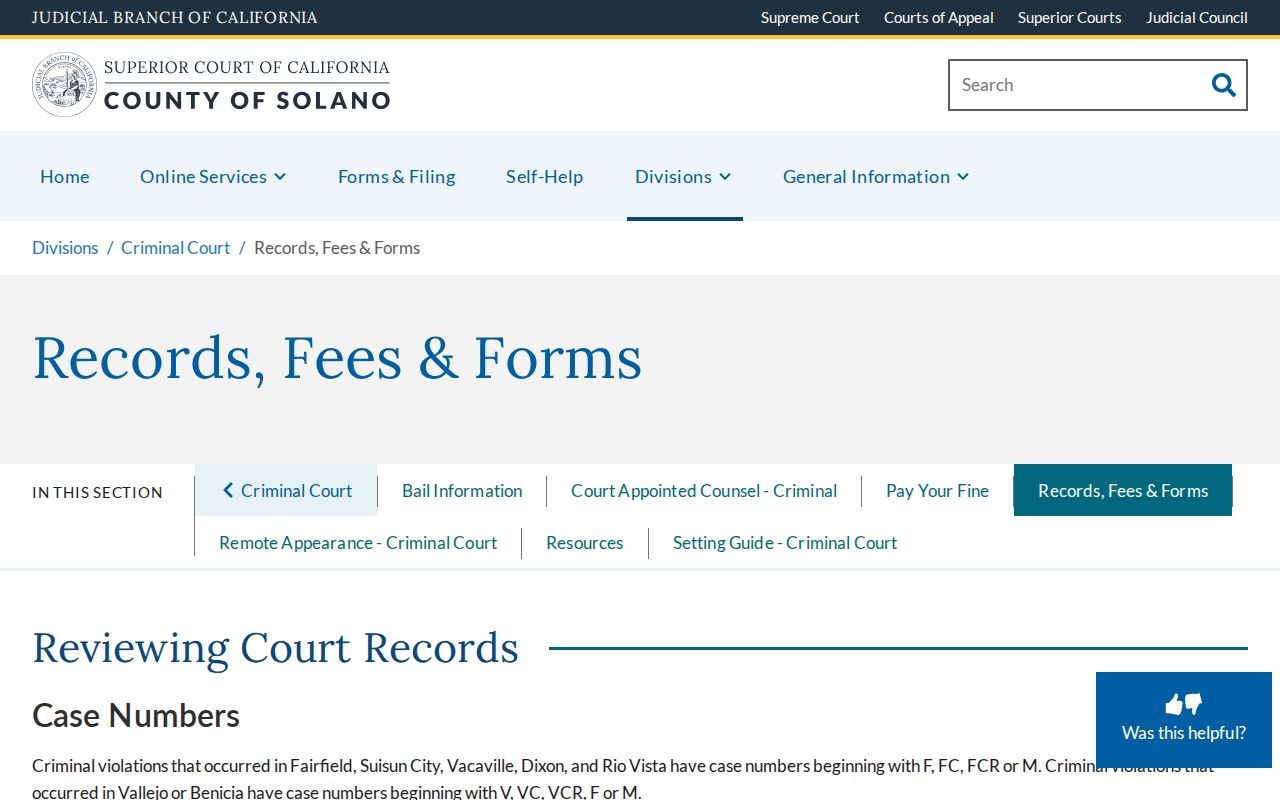
A court record may identify an heir or case event, but the deed chain still supplies the land continuity.
Benicia Previous Residents in Recorder Records
The Recorder's access channels create a useful historical break. Computer images in the public research area reach 1955, while microfilm reaches 1848. Earlier evidence may therefore require an in-person visit, a careful mail request, or staff guidance rather than a repeated online address search. The Recorder's FAQ also says that addresses are not stored in the official-records database.
The Historical Society's local recipe adds another fallback when the deed index grows thin: compare the four Sanborn editions, address-organized historic surveys, Museum photographs, census schedules through 1950, and the newspaper run. Museum research appointments are listed at $35 per hour Tuesday through Friday from 10 a.m. to 4 p.m.; high-resolution scans are listed at $10 for the first five and $5 thereafter.
Mail requests should include the title, party names, document number, book and page, recording date, and contact telephone when known. The envelope is marked “Recorder Copy Request” and sent to 675 Texas Street, Suite 2700, Fairfield, California 94533. Posted charges are $9 for the first page, $1 for each additional page, and $6 for certification. The county does not email documents.
Note: A no-address index is a design limit, so the APN and party-name pivot must come before the deed copy request.
Benicia Previous Residents and Sanborn Maps
The Historical Society's local house-history recipe begins with four Sanborn editions: February 1886, January 1891, June 1899, and August 1913. The 1886 coverage focuses chiefly on First Street. The 1891 map adds the Arsenal and East Fourth and I Street areas. The 1899 edition shows expansion along I and J streets toward West Eighth. These changes describe survey coverage and development, not a complete list of previous residents.
A Sanborn sheet can show a building footprint, use, outbuilding, block or lot setting, and street-number context. Compare it with the deed legal description and historic-property survey when the same number appears to move. Benicia's downtown grid and separately developed Arsenal are different address systems inside the same postal city.
Benicia Historical Society house-history guidance gives the local order for maps, surveys, Museum research, census, and newspapers.
Benicia Previous Residents in Directory Issues
Previous residents may appear in a verified issue without a continuous annual run. The 1871-72 Solano and Napa Counties Directory, 1874 Solano section, 1878-79 McKenney directory, 1884-85 McKenney issue, and November 1928 telephone directory each carry a different kind of clue. McKenney's 1878-79 volume can add acreage and post-office address for landowners. The telephone book centers on subscriber, phone number, and a party-line letter.
Licensed Benicia city-directory databases are confirmed as available through the library, but exact local years and publishers remain a catalog or reference-desk question. Do not fill a gap with an assumed Polk run. A directory can show occupancy or subscription for its year, while the Recorder is the source for title.
The historical collections are described fully in the Benicia city directory treatment; the backward trail here uses them only as dated evidence.
Benicia Newspaper Records Carry Past Clues
The Benicia Public Library lists The Herald for 1899-1914 and 1972-1977, Benicia Herald and New Era for 1914-1957, and Benicia Herald for 1958-1971. That run can explain a move between two directory issues, identify a sale, or connect a death notice to a cemetery row. Search the street, surname, spouse, organization, and event together, then try a spelling variant if OCR misses the first result.
Remote Newspaper Archive access requires a library card; the library link provides on-site access without that remote login. The same local-history layer links historic-property forms, maps, the 1874 atlas, and the Museum archive. These sources are especially helpful when a deed names land but not the household that occupied it.
Note: Newspaper absence can reflect OCR or a title gap, so a missing notice does not close the trail.
Benicia Previous Residents and the 1950 Census
The 1950 federal census is the newest public census schedule under the current release rule. It can supply household members, relationships, ages, occupation, and address geography for its enumeration date. Pair that schedule with the closest Benicia directory issue and newspaper run, then compare the household's names and street context. The goal is a dated sequence, not a claim that one source lists the entire address history.
SCGS adds Great Registers from 1866-1968, church and cemetery indexes, naturalization material, death records from 1850-2016, and deed, court, and newspaper indexes. Great Register coverage concerns eligible voters, so it is a historical clue rather than a full resident count.
Pairing flow: directory year -> nearest public census -> Benicia newspaper run -> deed, probate, cemetery, or obituary check.
California Elections Code section 2194 explains why modern voter-file access cannot be treated as an unrestricted extension of the historical Great Registers.
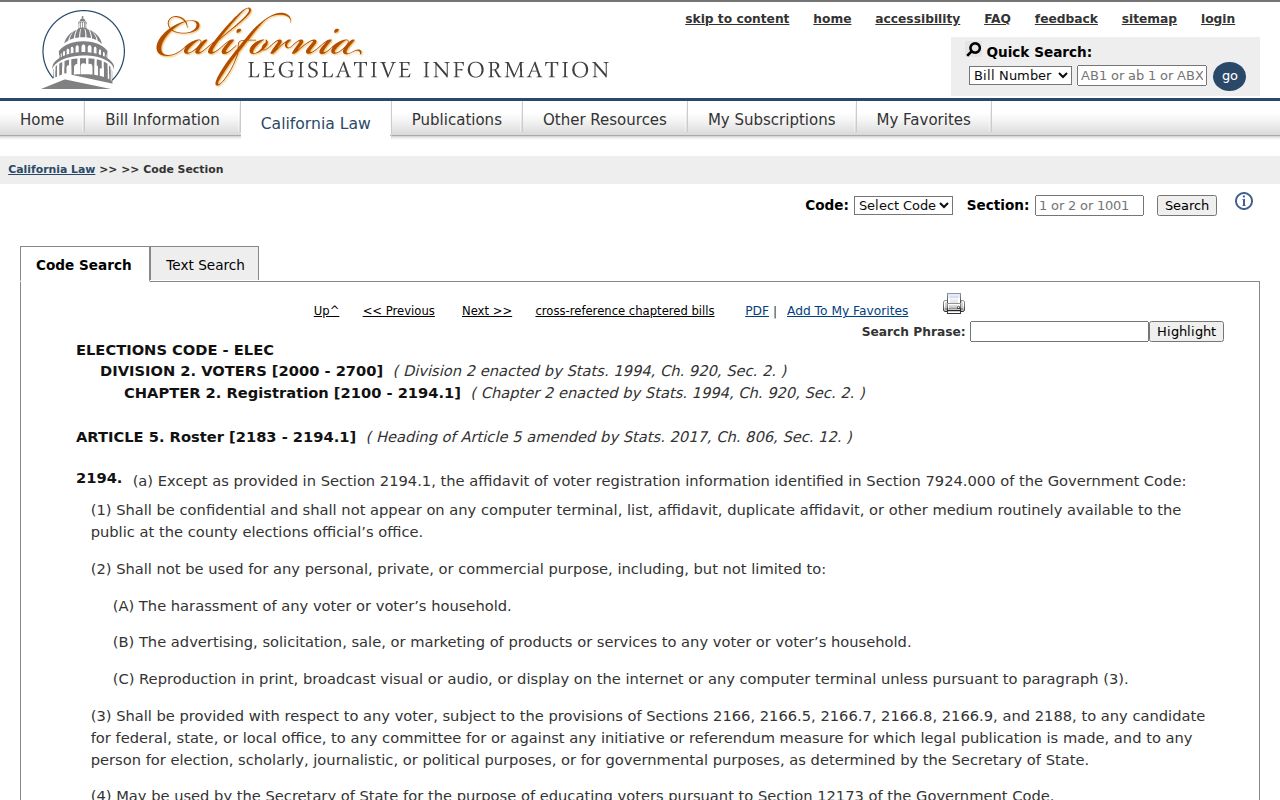
The voter-file capture marks the line between a historical register clue and a restricted modern file.
Benicia Address Records When Numbers Shift
No authoritative citywide Benicia renumbering event was verified. When a street number changes or disappears, compare the lot, block, subdivision, and deed legal description with successive Sanborn sheets and the historic survey. The 1847 downtown grid and the separately developed Arsenal can produce different numbering or building conventions. A number alone is not enough to join two eras.
Safe at Home also shows why a public address can be deliberately different from a residence. Eligible participants receive a substitute mailing address, confidential mail forwarding, service-of-process agency, and confidential voter registration. The program does not erase preexisting public data, and its exceptions include death, birth, marriage, divorce, and fetal-death certificates.
California Safe at Home guidance explains the substitute-address and confidentiality limits relevant to an address history.
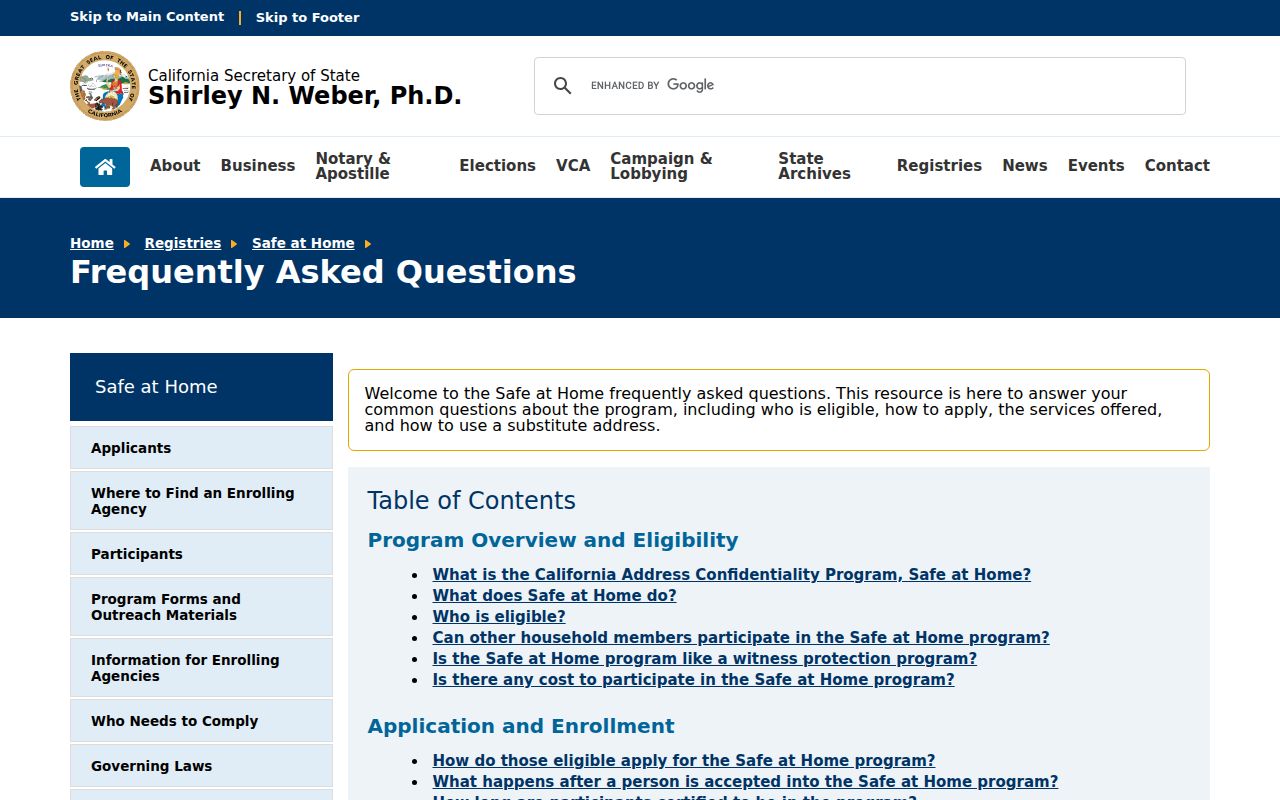
A safe address is a privacy measure, not a clue that can be reverse-engineered into a home location.
Benicia Past Households and Directories
A previous-residents trail ends when the sources stop answering the same question, not when a searcher finds one old name. Pair the deed chain with the city directory issue, then use the census, newspaper, cemetery, and probate layers to decide whether the person owned, occupied, inherited, or merely appeared in the record. The Museum of History Benicia reports roughly 29,000 growing catalog entries, including photographs, documents, organizations, and building narratives that can add a human link.
Probate can identify heirs and a case path. An obituary can supply relatives, a move, or a death date. Federal cases may be searched through PACER, but a filing address is a case clue and not proof of residence. The Northern District of California notes that cases before 1990 are absent from ECF/PACER and many pre-2006 files must be ordered from the Federal Records Center.
PACER is the federal access channel for a Benicia-related district case.
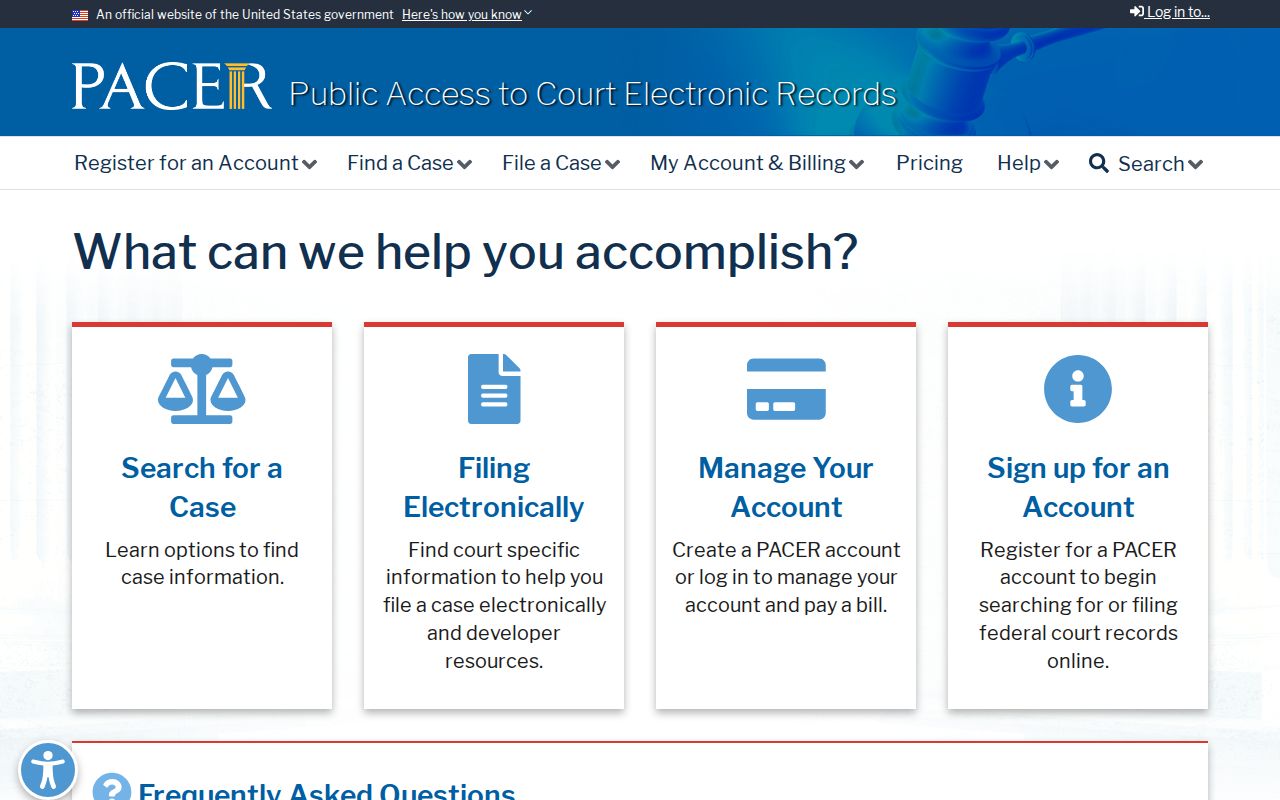
The federal-court capture belongs at the end of a dated record trail, after local sources identify the person and time.
House-history use. Previous residents research is appropriate for family history, preservation, and lawful personal study. Do not use an old address or name trail to stalk, harass, intimidate, or harm anyone.